 Versione italiana
 Deutsche Fassung
 Albar
 Alfa Romeo
 Amilcar
 Aston Martin
 Audi
 Austin
 Austin-Healey
 Autobianchi
 Bentley
 BMW
 Brightweel
 Cadillac
 Chevrolet
 Citroën
 Daimler
 DKW
 Ferrari
 Fiat
 Ford
 Innocenti
 Iveco
 Jaguar
 Lamborghini
 Lancia
 Land Rover
 Lotus
 Maserati
 Mercedes-Benz
 MG
 Mini
 Mitsubishi
 Morgan
 Morris
 Nash Healey
 NSU
 Porsche
 Renault
 Rolls-Royce
 Siata
 Simca
 Studebaker
 Subaru
 Triumph
 Volkswagen
 Benelli
 BSA
 Ducati
 Honda
 Kawasaki
 Moto Guzzi
 NSU
 Ossa
 Piaggio
 Suzuki
 SWM
 Yamaha
Fiat Formula Junior Panda - 1983
Prezzo su richiesta - P.O.R.
Financing options
Model history and curiosity
MIG is one of the historic Italian artisanal manufacturers recognized in the Formula Junior register (a category that carries on the legacy of Formula Monza, Formula Panda, and Formula Fire).
The name identifies a chassis builder that produced open-wheel training single-seaters during the 1980s and 1990s, in line with the design philosophy of the series.
Context and characteristics of MIG cars
Role in the category: MIG is among the small Italian manufacturers included in the official list of chassis permitted by the championship (alongside brands such as Ermolli, Reggiani, Corsini, Santandrea, and Tatuus).
Technical evolution: MIG cars accompanied the technical transition of the category, originating in the Formula Panda era (featuring a 903cc Fiat engine) and subsequently adapting to the regulations of Formula Fire and the modern-day Formula Junior (featuring a 1200cc Fiat FIRE engine).
Design layout: Like all single-seaters homologated for the series, MIG chassis follow a classic configuration: a tubular space frame reinforced with metal panels, a longitudinally mounted rear engine, a 4-speed gearbox derived from the Fiat Panda 30, and a complete absence of wings or aerodynamic appendages.
Historical and collector value: Today, surviving MIG examples are sought after in the historic racing car market, or as affordable entry-level vehicles for competing in national racing series.
Formula Panda was a historic Italian motorsport training category, active from 1983 to 1990, created to replace the preceding Formula Monza.
Key characteristics
Period of activity: From 1983 to 1990; conceived by Romolo Tavoni (director of the Monza Circuit). Engine: Derived from the Fiat Panda 45—specifically, a 903cc inline 4-cylinder engine (with pushrods and rocker arms)—featuring regulated, cost-effective modifications. Power output increased from the original 45 hp to approximately 85–90 hp.
Chassis and mechanics: A single-seater with a tubular chassis, a 4-speed gearbox derived from the Fiat Panda 30, no aerodynamic appendages (wings), and a low overall weight (approximately 380–465 kg).
Evolution: In 1990, the category evolved into "Formula Fire" (utilizing the 1000cc Fiat FIRE engine), later being renamed "Formula Junior" / "Formula Junior Monza."
Technical data
Terms of sale
Automotive practices
You may also be interested
Find your dream car

€ 14.000
Fiat 130 3.2 Saloon Manual - 1973
C1024
limited time offer
30/11/2026

€ 25.000 18.000
Lancia 2000 HF Coupè (1 of 1229) - 1973
INT10 - Rare car built in just 1229

€ 180.000
Porsche 911 2.4 S LWB - 1973
C1088 - Complete restoration

€ 19.000
Volkswagen Beetle Cabriolet 1300 - 1973
C000

€ 6.500
Honda CB 350 Four - 1973
C000

€ 39.000
Lotus Seven S4 RHD (1 of 644) - 1973
INT24

€ 28.000
Triumph TR6 PI - 1973
C000

€ 7.800
Yamaha 750 TX - 1974
C915

€ 18.000
MG B Roadster MKIII - 1974
C1018

€ 6.800
Honda CB 400 Four - 1974
C1108 - Single owner

€ 16.500
Lancia Fulvia Coupè 1300S S3 (818.630) - 1974
INT23 - Black plates, Engine overhauled

€ 20.000
Alfa Romeo Giulia Nuova Super 1600 - 1974
C910

€ 10.900
Autobianchi Nuova 500 Giardiniera Trasformabile - 1974
C1102

Prezzo su Richiesta - P.O.R
Ducati Scrambler DM 350 S - 1974
C1119

€ 12.000
Benelli Tornado 650 S2 - 1974
C000

€ 59.000
Brightweel AC Cobra 427 Replica - 1976
C1118

€ 25.000
Lancia Beta Montecarlo Spider 2000 S1 - 1976
L580
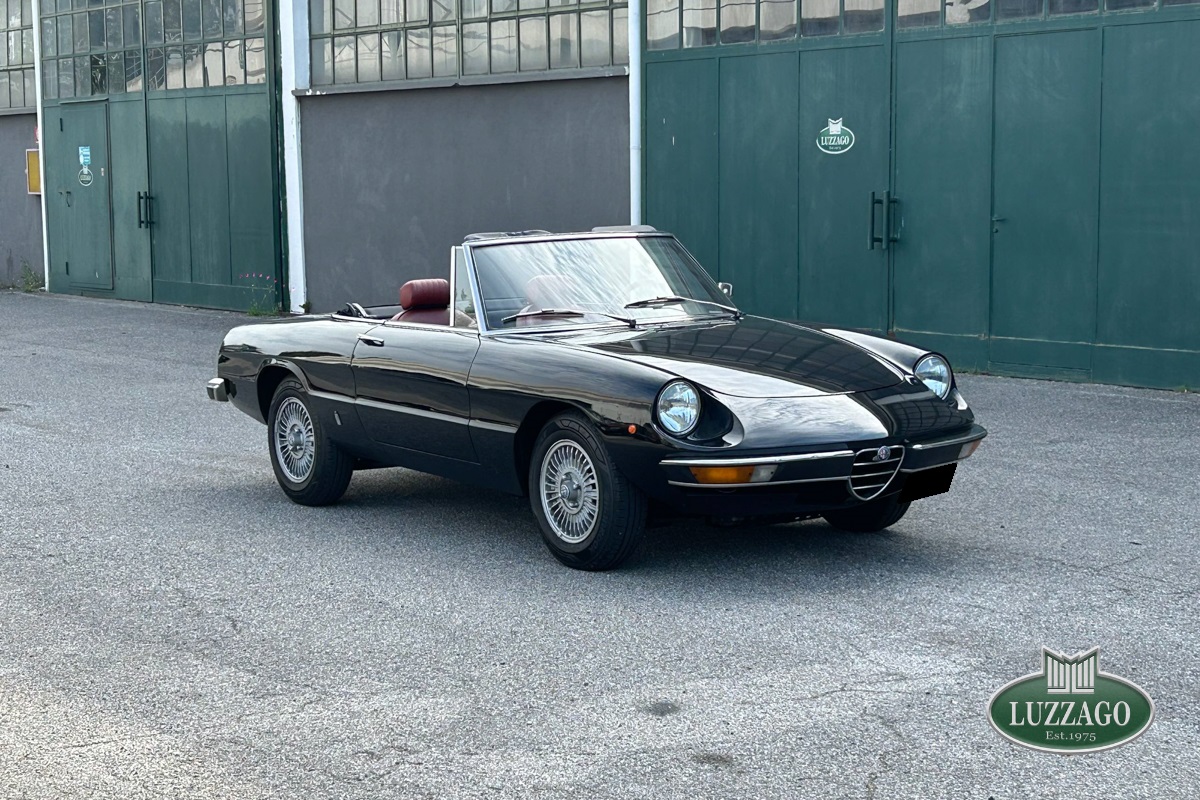
€ 28.000
Alfa Romeo Spider 1600 "Coda Tronca" - 1976
C1131

€ 1.500
DKW Munga F91/6 - 1977
C000 - Restoration project



 CA Auto Bank offer subject to approval. Pre-contractual documentation at the Dealership and on the CA Auto Bank website (Transparency section). Advertising message for promotional purposes.