 Versione italiana
 Deutsche Fassung
 Albar
Albar  Alfa Romeo
  Amilcar
  Aston Martin
  Audi
Audi  Austin
  Austin-Healey
  Autobianchi
 .png) Bentley
Bentley  BMW
BMW .png) Brightweel
Brightweel  Cadillac
  Chevrolet
  Citroën
  Daimler
  DKW
DKW  Ferrari
  Fiat
Fiat  Ford
Ford .svg.png) Honda
Honda  Innocenti
  Iveco
Iveco .png) Jaguar
Jaguar  Lamborghini
 .png) Lancia
Lancia  Land Rover
  Lotus
Lotus  Maserati
  Mercedes-Benz
  MG
MG .svg.png) Mini
Mini  Mitsubishi
 .png) Morgan
Morgan  Morris
  Nash Healey
  NSU
NSU  Porsche
  Renault
  Rolls-Royce
  Siata
Siata  Simca
Simca .png) Studebaker
Studebaker  Subaru
  Sunbeam
  Triumph
  Volkswagen
  Benelli
  BSA
BSA  Ducati
 .svg.png) Honda
Honda  Kawasaki
  Moto Guzzi
 .png) NSU
NSU  Ossa
Ossa  Piaggio
  Suzuki
  SWM
SWM  Yamaha
 Maserati Spyder i.e. (Spyder '90) - 1990
€ 33.000
Financing options
Model history and curiosity
The 1990 Maserati Spyder i.e. (often simply referred to as the "Spyder '90") represents the open-top evolution and maturity of the successful Biturbo family.
With this series, Maserati decided to officially drop the "Biturbo" name, introducing a luxurious car that was extensively updated in terms of both aesthetics and mechanics.
The bodywork was entrusted to the renowned design house Zagato, which assembled the cars at its facilities just outside Milan.
To compensate for the lack of a roof, the wheelbase was shortened compared to the sedan and coupé versions; this turned the car into a genuine two-seater (the rear seats offered space that was, at best, nominal) and ensured greater torsional rigidity for the chassis.
Coinciding with the 1990 model year, the car underwent a significant restyling by Marcello Gandini. The rigid geometric lines of the 1980s were softened with new, more wraparound bumpers, aerodynamic side mirrors (the famous "teardrop" style), redesigned 15-inch alloy wheels, and a modernized front grille.
The suffix "i.e." stands for *Iniezione Elettronica* (Electronic Fuel Injection)—a technology that had recently replaced the problematic carburetors of the earlier series, markedly improving reliability and power delivery smoothness.
Although electronic fuel injection had made power delivery more refined compared to the older carbureted models, the V6 engine retained a feisty, temperamental character. Below 3,000 rpm, the car was docile and almost sluggish, but once the twin turbochargers (typically water-cooled IHI units) spooled up, the thrust became brutal and sudden. To help put this sudden surge of power onto the road, Maserati equipped the car with a limited-slip differential (known as Sensitork or Ranger, depending on the version). Designed in-house by Maserati, it significantly improved traction compared to the earliest Biturbo models.
Technical specifications:
- Architecture: 90° V6, twin-turbo;
- Power: 220 hp;
- Max Torque: 260 Nm;
- Top Speed: 225 km/h;
- Acceleration 0–100 km/h: 6.5s;
- Drivetrain and transmission: Rear-wheel drive, 5-speed ZF "dogleg" manual gearbox (first gear positioned down and to the left).
The cabin was one of the car's standout features, designed to offer a luxury grand-touring experience and balance out a driving setup that did not prioritize extreme cornering performance. The interior is a triumph of Italian craftsmanship from that era. It is dominated by thick, soft leather upholstery (often two-tone or featuring Alcantara inserts) and genuine walnut burl trim on the dashboard, gear lever, and door panels. It also features the iconic oval analog clock set in the center of the dashboard—a true signature of the Trident marque.
The 1990 Spyder i.e., featuring a styling update by Marcello Gandini, was produced in limited numbers—only a few hundred units—before being replaced by the subsequent and final series (the 1991 Spyder III, equipped with new poly-ellipsoidal headlights).
This makes the "Spyder '90" versions exceptionally rare cars that are seldom encountered on today's classic car market.
Technical data
Optional
Terms of sale
Automotive practices
You may also be interested
Find your dream car
€ 89.000
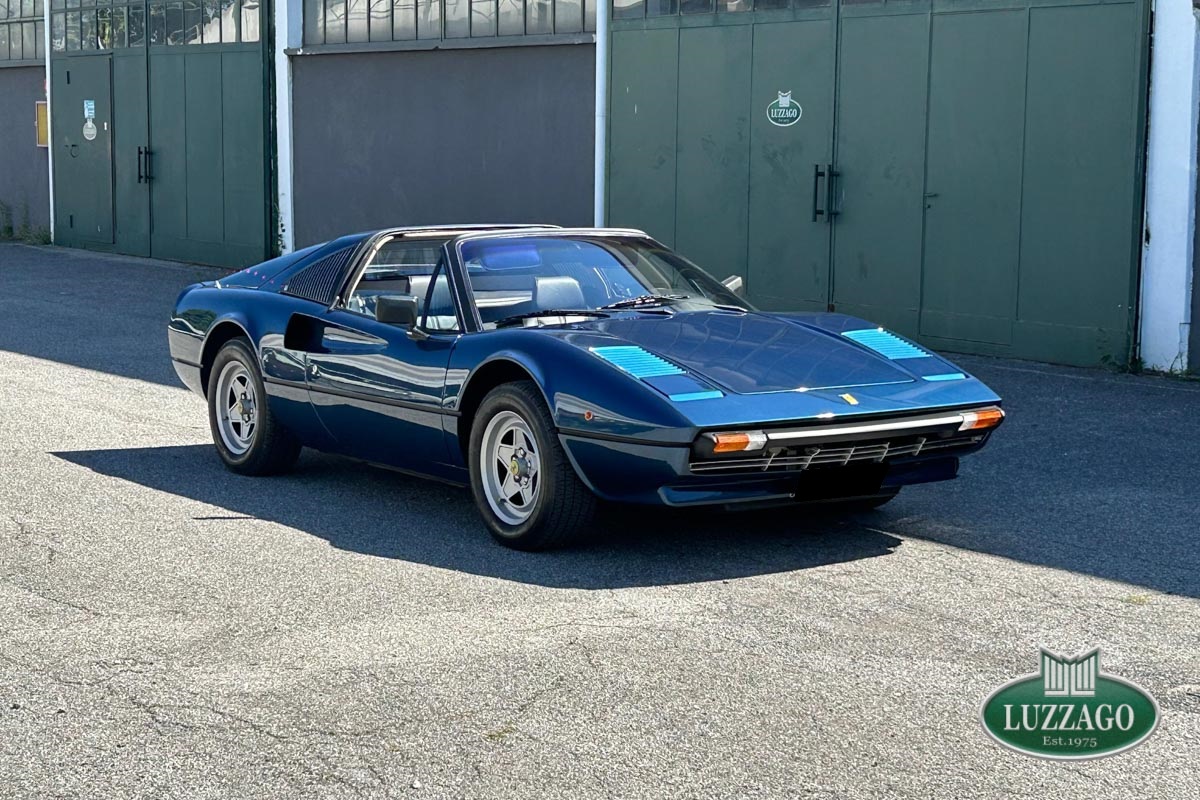
Ferrari 308 GTSi America (1 of 1749) - 1981
C1067 - Complete service history
.jpg)
€ 4.000
SWM 320 TL MW - 1981
L405
.jpg)
Prezzo su richiesta - P.O.R
Morgan 4/4 1600 2 Seater - 1981
C000
limited time offer
31/10/2026
.jpg)
€ 18.000 16.500
Alfa Romeo Alfa Romeo Alfetta GTV 2.0 L - 1981
C1109
.jpg)
€ 19.000
Lancia Beta Spider Zagato 1600 S2 - 1981
L611
.jpg)
€ 33.000
Land Rover Range Rover 3.5 V8 Manual (LHABV2) (1 of 2500) - 1981
C965 - One owner
.jpg)
€ 1.500
Honda CB 125 X - 1982
C1101
limited time offer
31/10/2026
.jpg)
€ 65.000 59.000
Ferrari Mondial Cabriolet 3.0 Quattrovalvole (F105A) - 1982
C000
€ 3.500
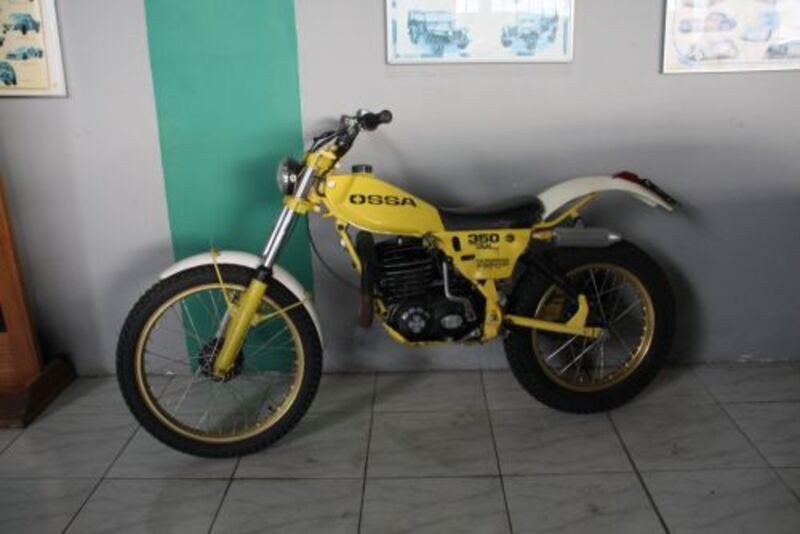
Ossa 350 - 1983
L000
.jpg)
€ 11.500
Daimler DS 420 RHD Automatic - 1984
L41
limited time offer
31/10/2026
€ 12.900 11.500
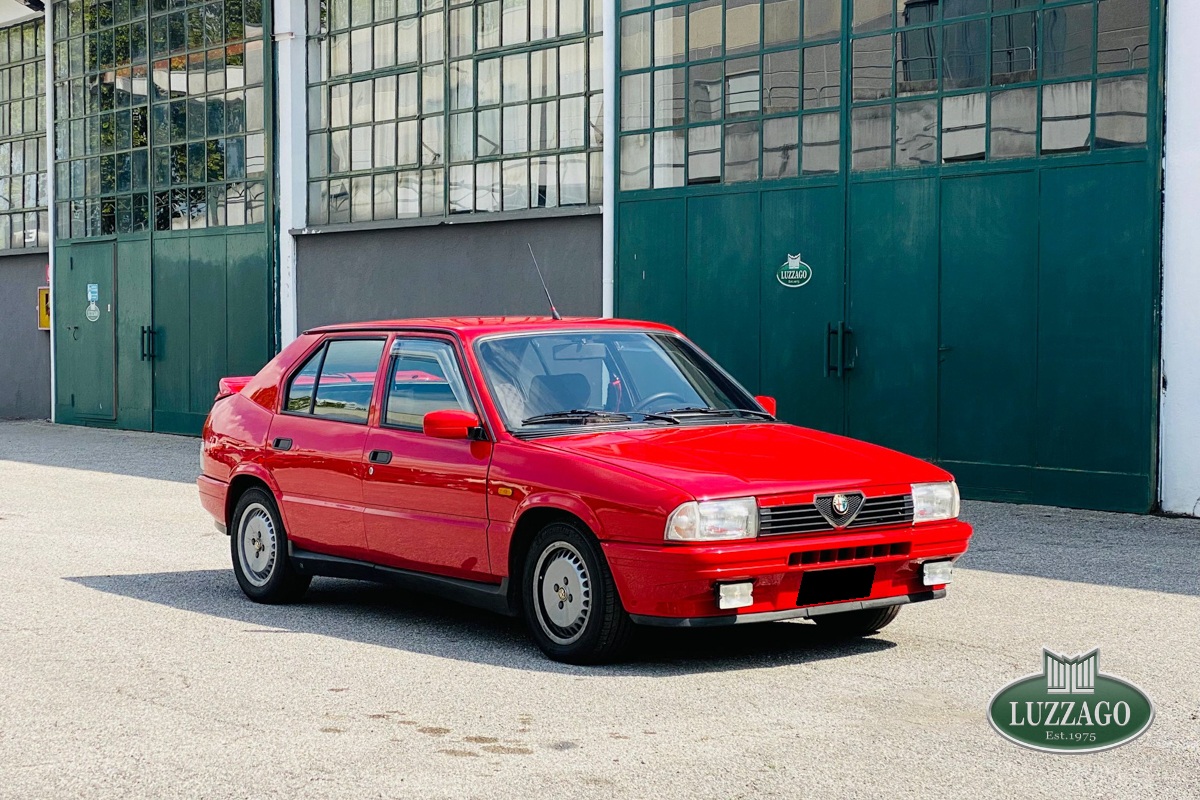
Alfa Romeo 33 1.7 Quadrifoglio Verde S1 - 1987
C1135
.jpg)
€ 23.000
Mercedes-Benz 420 SEC - 1987
C1056
.jpg)
€ 19.900
Mercedes-Benz 560 SEL - 1987
C737
.jpg)
Prezzo su Richiesta - P.O.R
Alfa Romeo 75 Turbo Evoluzione (1 of 500) - 1987
C1132 - RIAR, Service book
.jpg)
€ 25.000
Albar Beach Buggy S 1600 - 1988
C000
.jpg)
€ 4.900
Renault R4 TL - 1988
C553
.jpg)
€ 13.000
Rolls-Royce Silver Spur 1 RHD - 1988
C423 - ASI approval
.jpg)
€ 39.000
Mercedes-Benz 560 SEC - 1989
C1012
(1).jpg)
€ 35.000
Porsche 928 S4 Automatic - 1989
C1009
(2).jpg)


 CA Auto Bank offer subject to approval. Pre-contractual documentation at the Dealership and on the CA Auto Bank website (Transparency section). Advertising message for promotional purposes.